Follow Us

Showing posts with label Psychology. Show all posts

Monday, 9 February 2026

Not Just a Flex: Many Layers of Agust D’s Daechwita (August D Trilogy: Part 1)

February 09, 2026


I did NOT like Daechwita when I first heard it.

This feels important to admit. I was new to rap and hip-hop then, still learning how to listen without expecting melody to soften everything. It sounded loud, aggressive and just felt arrogant. So, Daechwita first landed just as noise. A flex song that was impressive for the flows, but emotionally distant. I moved on.

What made me go back to it wasn’t the song itself, but Yoongi. By then, Seesaw had already been on repeat for months and Amygdala made me felt seen. The layers in them, whether sonically or lyrically, made me rethink that Daechwita cannot just be noise. By then I knew that when Yoongi creates, there is almost always more happening than what you see on the surface.


So I went back to Daechwita.

This time, I didn’t just listen. I read. I sat with the lyrics. I paid attention to the production choices in the videos. I stopped reacting to the volume and started asking why it needed to be that loud. What was being declared and what was being defended? What was Yoongi hiding in plain sight?

And slowly, the song shifted.

What had sounded like a loud flex began to reveal itself as something far more complicated. A song about Power. Power, that doesn’t feel comfortable when wielding it. It is about identity split between survival and dominance. It is about history, class in society, and the cost of sitting on a throne you fought your way onto. Daechwita was daring me to look closer.

This post comes from that second listen. And the multiple times I put it on loop. And from realizing that Agust D often builds his work like a trapdoor. What looks like bravado is usually a warning and what sounds like confidence is often armor. And what feels confrontational to listener, is more often a conversation he is having with his own past self.

1st layer: Sound as declaration

Before Daechwita says anything, it announces itself.

The opening is not subtle. It isn’t meant to be. The traditional daechwita sample crashes in and you just cannot ignore it. Historically, daechwita was played to signal the presence of royalty. It meant that the King was passing by, and you were expected to bow down and be reverent.

Starting the song this way is a very deliberate choice made by Agust D. It is a choice that is meant to be just a clever fusion meant to sound exotic or impressive to outsiders. It is a sound rooted in hierarchy, control, and public spectacle for the natives. By placing it at the very beginning of the song, Agust D establishes his position as royalty. He says:


Who's the king, who's the boss?
You all know my name


When that traditional sound collides with modern hip-hop production it just sharpens the whole sound. This is why the song can feel abrasive on first listen, especially if you’re new to rap or unused to music that refuses to cushion itself. But that abrasiveness is the point in this song.

Flex songs usually invite admiration. But, Daechwita doesn’t wait for approval or care if you’re comfortable. The sound design itself mirrors the song’s central tension: power that must be declared loudly because it is always under threat. It is also about authority that cannot afford softness.

There’s also something deeply intentional about choosing a sound so culturally specific and refusing to translate it. The song doesn’t pause to explain itself. It doesn’t contextualize the Korean traditions infused for global palatability. It assumes its right to exist exactly as it is. That refusal matters too because Agust D never seeks validation. This is Korean history meeting Korean modernity on its own terms, not filtered for international consumption. This power (whether it’s Agust D or BTS) didn’t appear overnight and it carries the weight of history whether it wants to or not.


2nd layer: The Persona of the King

At the beginning, the king in Daechwita looks exactly like what people expect. Someone with absolute authority, wealth and power. Agust D displays  that without apology. A ruler who answers to no one. If you stop there, it’s easy to call the song a victory lap or a flex.

But the king is not relaxed. There is nothing indulgent about him. There is no pleasure or softness about the king. Instead the persona feels rigid, hyper-aware, and paranoid. This is not a man who is enjoying his dominance but a man who is constantly forced to defend it. Here, the throne reads more like a pressure point. Here authority is not freedom but a shackle. To sit at the top is to be seen, judged, and challenged constantly. Power, in Daechwita, is something you must perform flawlessly, because even the smallest crack can lead to complete collapse.

This is where the song starts betraying its own swagger. The king persona is constructed and almost theatrical. The louder the declaration of power, the more it suggests what is underneath is vulnerable to being taken away. It talks about confidence that never feels truly permanent. And then there’s the isolation. The king is shown always standing alone. Elevated, untouchable, and fundamentally cut off from his subjects. There’s no warmth in his rule and no sense of belonging. The higher he rises, the more solitary he becomes.

That’s where this persona starts to feel familiar. Because Agust D has never written power as something uncomplicated. Even at his most confident, there’s always an undercurrent of tension. The king in Daechwita is not the ultimate aspiration. It is a role assumed out of necessity. A mask worn to survive a world that is eager to strip you of everything the moment you falter.

Agust D is NOT saying, “I am king, admire me.”
This is him saying, “I am king, don’t come for me.”

Because Daechwita doesn’t just present the king and only the king. It places him opposite someone from the lower class, poorer, but someone who knows exactly what it costs to rise this high.

3rd layer: The king vs the commoner

Daechwita also gives us the king’s shadow, in the commoner (also played by Min Yoongi)

Opposite the ruler stands another figure. The version of the self that existed before the throne, before the authority, before the armor. The boy who knew hunger, struggles, instability, and the particular humiliation of wanting more when the society tells you its all beyond your reach. The commoner is not a metaphor pulled from history. It is very personal.

And so, this is where the song turns inward. The tension in Daechwita is not between ruler and enemies. It is actually between past and present selves. Between who you were when you had nothing and who you became to make sure you never return there. The king in Daechwita isn’t an oppressor because he is cruel. He is trying to suppress his own past self.

The commoner exists as a constant reminder to the king of his very humble origins, and as a result he is also a threat to the illusion of stability the throne promises. If the past self resurfaces unchecked, it destabilizes the authority of the present one. So, the king does what power has always done when it feels challenged. He silences it. Which is why the violence feels strangely intimate.

This is not an external conquest. This is self-policing. The ruthless discipline of someone who knows exactly what it costs both to rise and to fall. The king cannot afford nostalgia because remembering too much risks slipping back into vulnerability.

I got lots to lose
Shove the past into a rice chest
I'm about to dine on what I know is mine

The song doesn’t celebrate killing the past self. Instead it is meant to force us to question whether trying to bury your past gives you strength strength or if it is fear dressed up as control. The king survives by denying the commoner, but he also becomes haunted by him. This is central to how Agust D writes identity. Success does not erase one’s origin and origin isn’t always a guarantee to success. The self does not split because one version is false, but because both are true and cannot comfortably coexist.

There is no moment where the king embraces the commoner. There is no healing montage or an integration arc. There’s only dominance and suppression. That’s why the song feels tense even at its height… somewhere underneath all that swagger and spectacle, you can actually hear the cost of survival. The power on display is real, but so is the cost of that power.


4th layer: Voilence, control and fear

The violence in Daechwita is not subtle or just decorative.

Executions, blood, surveillance… Punishment carried out publicly and decisively. The king dancing on the backs of his subjects while they are kneeling and bowing to his authority. These images are not there for the sake of aesthetics, nor are they meant to glamorize the cruelty of the king. They exist because when power is threatened, it always looks to set an example. That is what order enforced through fear looks like.

The king doesn’t lash out because he enjoys cruelty. He does it because control must be visible to everyone to remain intact. The moment authority becomes quiet, it risks being questioned. So, the king stays loud, intimidating and absolute. The threat is not just for the commoners, but also for the king, because if the king ever hesitates, the entire structure could collapse.

This is why the imagery feels oppressive rather than triumphant. Fear runs underneath everything. Fear of losing his status and of being dragged back down to the gutters. Violence becomes a way to manage that fear, to externalize it, to convince both the world and oneself that the throne is stable. But fear doesn’t just magically disappear when you try dominate it, does it?

There is also something unsettling about how detached the king is from the violence. The detachment reveals how far the king has moved from humanity in order to survive power. The cost of staying on top is emotional numbness, enforced by design.

This is where the song quietly questions the fantasy of domination. If power requires so much of vigilance, so much suppression and force, then what or who exactly is it protecting? And at what point does survival turn into self-erasure? 


5th layer: Flex as a defense mechanism

By the time Daechwita reaches full swagger, it is tempting to stop thinking and just let the bravado wash over you. The delivery of the part is unflinching. This is the part most people freeze-frame and call the point. Flexing, here, comes from memory and scarcity. From knowing exactly what it is like to have nothing and deciding, consciously or not, that you will never be that vulnerable again. The confidence in the song feels aggressive because it had to be. The flex is the shield.

This is where Daechwita diverges from the idea of arrogance because it normally stems from certainty, safety and a sense of entitlement. This song assumes none of that. Every declaration of success is a documentation of Agust D’s journey from having to choose between a full meal or a bus ticket to the stage where he has achieved his fame, respect, money and status. The flex is not about looking down on others who are struggling. It is about refusing to let his struggles and hard work erased from history.

The confidence in Deachwita feels rehearsed and repetitive because it is necessary. Like armor you put on every day until you forget what it feels like to be without it. The repetition is just reinforcement and a reminder.

For Agust D, success is something he protects from being questioned constantly, from his hard work minimized, or his struggles to reach the top forgotten. The flex becomes a language of survival. It is simply his way to say, I know where I came from, how I reached this point and I refuse to let all that overlooked. That is why the confidence in Daechwita can feel intimidating because Agust D is setting boundaries with the song. He is saying not to underestimate or mistake restraint for weakness.

And yet, there’s a quiet exhaustion embedded in that posture, because always having to prove your worth, even to ghosts of the past, takes a toll. The flex works as a shield, but it does not erase or heal. It helps to explain that strength and bravado can be both empowering and imprisoning. That confidence can save you and still cost you something. That survival strategies don’t automatically retire just because circumstances change.

So when people dismiss this song as “just a flex,” they miss the tension of holding it all together. They miss the fear underneath the volume.

6th layer: Cultural reclamation

One of the most quietly radical things Daechwita does is refuse to translate itself.

The song does not pause to contextualize its deep cultural references for accessibility. The traditional sounds aren’t meant to be exotic, the visuals aren’t supposed to educate, the historical references in the lyrics are not explained. All of it is central to the song and the video.

Too often, non-Western cultural elements are treated as ‘exotic’ and borrowed textures meant to add novelty or depth. In the process, they are usually stripped of their weight. Daechwita refuses that framework entirely. By anchoring the song so firmly in Korean tradition, history and culture yet delivering it through modern hip-hop, Agust D collapses the false binary between “old” and “relevant,” “traditional” and “global.”

There’s confidence in that choice and also defiance. This is music that does not seek Western validation, even as it exists on a global stage. It doesn’t explain itself for international listeners. It doesn’t dilute its references to be easily digestible. It assumes its right to take up space exactly as it is. If you don’t understand it, that’s not a flaw in Agust D’s work. Treat it as either your invitation to listen harder or signal to give up. It all depends on who YOU are as a listener.

When you look it this way, the song’s confrontational tone makes even more sense because it is about protecting his own narrative space and refusing dilution or misinterpretation. And that’s why Daechwita had to come first in the trilogy. Before freedom could be questioned, before morality could be interrogated, they had to be claimed without apology.

Which brings us to the final turn… once power is established this forcefully, the next question becomes unavoidable: what do you do with it?

7th layer: The story that most people see

There is the most common interpretation of Daechwita that most people land on first, and it’s not wrong.

In that version, the song tells a familiar story of a commoner who rises through grit, hunger, and ambition. He claws his way to the throne, becomes king, and somewhere along the way he forgets what it meant to be powerless. All the glory and power turns his head and as a result his authority turns oppressive. The crown rots. And then, in a cyclical act of justice, another figure from the margins rises to overthrow the tyrant. The oppressed kills the oppressor to restore the balance. It is an age old story.

But then the song and the story in it stops cooperating because we do not really see the aftermath. We don’t see whether the new ruler governs differently or if the cycle continues. The story cuts itself off at the moment of violence, refusing closure to its audience. If this were a redemption narrative, the song would give us relief and we would see the commoner rise and govern with love and empathy. Instead, it leaves us with more questions.

That is our biggest clue. The king and the commoner are actually not two separate people in this narrative. They are two selves of the same person. The greed that gets “killed” is not external evil vanquished once and for all. It is a shadow that needs to be acknowledged, confronted and managed constantly. And that certainly isn’t the same as healing.

If Daechwita were truly about destroying the greedy part of the self, the song would sound lighter or softer by the end. It would sound like victory. Instead it remains tense as if it knows something the listener doesn’t want to admit yet: that killing/suppressing a part of yourself does not mean it disappears. It only means it stops speaking out loud and maybe that ambiguity is the point.

The song refuses to tell us whether the cycle breaks because maybe it doesn’t. Maybe power always carries the risk of corruption, regardless of where you started. Maybe the line between oppressed and oppressor is thinner than we would like to believe. Maybe survival strategies don’t dissolve just because circumstances change. It doesn’t offer reassurance that the “right” self will win in the end. It only shows us what happens when ambition, fear, memory, and power collide inside one person.

Which brings us back to why this song feels so unresolved, even now.
Because the question it asks isn’t who deserves the throne, it is whether anyone can sit on it without becoming someone they don’t recognize themselves.
And Daechwita refuses to answer that for us.
It just leaves the crown on the ground and walks away.

8th layer: Daechita as the opening of the trilogy

Daechwita was never meant to stand alone.

Seen in isolation it feels way too excessive. It is only about power and declaration. But placed at the beginning of the Agust D trilogy, it starts to look less like a the end point and more like a necessary first position. Before you can question power, you have to acknowledge it. Before you can interrogate freedom, you have to first admit who holds control.

This is why Daechwita comes first.

Next comes Haegum, a song that will ask uncomfortable questions about desire, restriction, addiction, and freedom. It will complicate the very authority Daechwita establishes. But that interrogation only works because the authority and the throne has already been established and claimed. You cannot critique what you pretend not to possess.


Sunday, 9 March 2025

Interlude: Shadow by SUGA of BTS #DeepDive

March 09, 2025


Happy Birthday to Min Yoongi, better known as Suga of BTS and Agust D.


To celebrate, we’re taking a deep dive into Interlude: Shadow from BTS’s Map of the Soul: 7, a song that encapsulates the duality of ambition and fear, success and self-doubt.

Min Yoongi is a multifaceted artist who expresses himself through different personas—Suga, his stage name in BTS, and Agust D, his solo moniker. As Suga, his artistry leans toward polished, introspective storytelling that aligns with BTS’s themes of self-love, societal reflection, and personal growth. His work under Agust D, however, is rawer, unfiltered, and fiercely personal, often tackling themes of mental health, self-identity, and the struggles of fame.


This track, which serves as a pivotal moment in the Map of the Soul narrative, is heavily influenced by Carl Jung’s concept of the ‘shadow’—the repressed and often darker side of the self. Through its introspective lyrics, haunting production, and visually striking music video, Interlude: Shadow paints a visceral picture of the inner conflicts that come with fame. It also serves as an intersection between his two personas, blending the introspective vulnerability of Suga with the raw confrontation of Agust D.


The Shadow: A Concept by Carl Jung

Before delving into the song, let’s understand what Jung meant by the ‘shadow.’ Jung, a Swiss psychologist, described the shadow as the unconscious part of our psyche—comprising traits, fears, and desires we reject or suppress. Often, our shadow contains aspects of ourselves we may not want to confront, yet it inevitably influences our emotions and actions.

Jung’s concept of the shadow is part of a larger framework known as the Map of the Soul, which outlines the structure of the human psyche. This framework includes:

Persona:
The mask we wear to present ourselves to the world, shaped by societal expectations.
Ego: The conscious mind, the ‘I’ we identify with.
- Shadow: The unconscious self, where repressed desires and fears reside.
- Anima/Animus: The inner feminine side of a man (anima) and the inner masculine side of a woman (animus), representing deeper emotional truths.
- Self: The ultimate goal of personal growth, where all aspects of the psyche—both conscious and unconscious—are integrated into a balanced whole.

For an artist like Suga, who has climbed to unimaginable heights, the shadow manifests as fears of losing himself in success, of reaching the top only to feel more isolated than before. Interlude: Shadow is an open dialogue with this unseen self, questioning the cost of his ambitions and the parts of himself he may have suppressed in his rise to fame.


The Lyrics

The song’s opening lines are deceptively simple: “I wanna be a rap star, I wanna be the top”. These words echo the unfiltered ambition of a young dreamer. But as the track unfolds, the tone shifts: “Don’t let me fly, now I’m scared. Don’t let me shine.”—a plea that reveals the anxiety accompanying his rise. The shadow speaks, acknowledging that with great success comes the fear of falling.

One of the most haunting lines in the song—“But my growing shadow swallows me and becomes a monster”—depicts how unchecked ambition and fame can consume a person. This mirrors Jung’s idea that the shadow, when left unacknowledged, can overtake the self and become overwhelming.

As the song progresses, Yoongi acknowledges the inevitable clash between his desires and fears: “The moment I faced myself brought the lowest / It so happens that I'm flying the highest.” This paradox reflects the tension between his public success and private struggles. Facing one’s shadow can be painful, yet it is necessary for growth.

The lyrics also address an internal debate, with the shadow challenging him: “All the things you wanted, you've got it all / So what's the problem? Just enjoy it / Or just let it go, no? Then run, or stop / Don't whine, just choose one or the other.” These words sound almost mocking, as if his own mind is questioning why he cannot simply be satisfied with his achievements.

Toward the end, the confrontation reaches its climax: “We are one body, sometimes we will clash / You can never break me off, this you must know.” This is the moment of reckoning—Yoongi acknowledges that he cannot escape his shadow. It is a part of him, inseparable from his identity. The final acceptance, “Yeah, yeah, can't break me off, whatever you do / Yeah, you'll be at ease if you admit it too”, suggests that true peace comes from embracing one’s shadow rather than fighting it.

This duality of yearning and dread is a recurring theme in Agust D’s discography. In The Last, he lays bare his struggles with mental health and fame, while Amygdala unearths painful memories. Here, in Interlude: Shadow, he personifies the push and pull between his public persona and inner fears.

Check out the full lyrics here.


The Music

The production of Interlude: Shadow mirrors the song’s lyrical battle. It begins with a slow, almost hypnotic melody, reminiscent of a confession. As the track progresses, the beat intensifies, growing chaotic, echoing the sense of spiraling out of control.

Unlike traditional hip-hop tracks, Interlude: Shadow weaves elements of rock and electronic distortions, adding an unsettling, almost suffocating atmosphere. This distortion reflects the turmoil of an artist losing grip on his sense of self.

This sonic chaos is part of a larger thematic trilogy within Map of the Soul: 7, where Persona (by RM) explores the external self, Shadow (by Suga) delves into inner fears, and Ego (by J-Hope) embraces self-acceptance. RM’s Persona is bright and bold, reflecting the masks we wear to interact with the world. J-Hope’s Ego, on the other hand, is celebratory and upbeat, symbolizing acceptance of all aspects of oneself. Shadow sits between them—a confrontation with the parts of ourselves we’d rather ignore, serving as the bridge between wearing a mask and fully embracing one’s true identity.

The contrast in sound across these three tracks highlights their thematic connection. While Persona is energetic and declarative, and Ego is vibrant and optimistic, Shadow is brooding and tumultuous. Together, they create a complete arc—one that reflects Jung’s psychological framework, guiding the listener through the journey of self-discovery.


The Music Video


The Interlude: Shadow music video is a masterclass in visual storytelling, packed with symbolism that reinforces the song’s themes. Suga moves through a narrow, dimly lit corridor as faceless figures chase him—an embodiment of his mounting anxieties and the suffocating expectations that come with fame. The ever-present shadows, stretching and growing behind him, illustrate how inescapable these fears have become.

The corridor itself is reminiscent of British Indian sculptor Anish Kapoor’s installation Svayambh, which means “self-made” or “auto-generated” in Sanskrit. This parallel suggests that the internal struggle Suga faces is a product of his own mind, a battle he has created and must confront alone.

Six shadows line the hall, likely symbolizing the unseen presence of the other BTS members. In Jungian terms, they could represent different facets of his psyche—the fragmented self that fame has shaped. Later, the figure 8 from O!RUL8,2?encircles Suga’s dual selves, a visual echo of the infinity symbol. This reinforces the idea that the battle between light and shadow, self and ambition, is an ongoing cycle—one that may never truly end.


While we have explored the lyrics, music, and visuals separately, their true impact emerges in how they work together to embody the battle between Suga and his shadow. Jungian psychology emphasizes that the shadow is not an external force but an intrinsic part of the self—one that must be acknowledged, not eradicated. Together, these elements paint a complete picture of a man standing at the crossroads of ambition and fear. He cannot run from his shadow; he can only accept it.


Embracing the Shadow

Interlude: Shadow is more than just a song—it is a deeply introspective piece that lays bare the cost of ambition. Through its haunting lyrics, turbulent sound, and symbolic visuals, Suga brings Jung’s concept of the shadow to life, exposing the battle between the self we project and the fears we suppress. The song doesn’t offer easy answers because there are none. Instead, it presents the raw truth: the shadow is an inseparable part of who we are.

For Min Yoongi, this struggle is ongoing. As an artist who has climbed to staggering heights, he must constantly negotiate with his shadow, questioning whether success is worth the sacrifices it demands. Yet, through this confrontation, there is a glimmer of resolution. By acknowledging the shadow rather than resisting it, he takes a step toward self-acceptance. The final takeaway isn’t about conquering fears but understanding that they coexist with ambition—that light and darkness are two halves of the same whole.


Perhaps that is the greatest lesson Interlude: Shadow offers: we do not need to defeat our shadow. We only need to recognize it, listen to it, and learn from it.


FAQs

1. How does Interlude: Shadow relate to Carl Jung’s theories?

The song embodies Jung’s idea of the ‘shadow,’ the unconscious part of our psyche containing repressed traits and desires. By confronting his shadow, Suga reflects on the hidden fears and desires that come with fame, aligning with Jung’s belief in integrating the shadow for personal growth.

2. What is the significance of the imagery in the music video?

The music video features symbolic visuals, such as Suga walking through a dimly lit corridor with faceless figures, representing mounting anxieties and the pressures of fame. The growing shadows illustrate the inescapable fears that accompany success.


3. How does Interlude: Shadow fit into the larger narrative of Map of the Soul: 7?

Serving as a pivotal moment in the album, Interlude: Shadow bridges themes from previous tracks like RM’s Intro: Persona and j-hope’s Outro: Ego. It represents the confrontation with one’s inner fears, a necessary step before achieving self-acceptance and growth.


4. What musical elements are notable in Interlude: Shadow?

The track combines hip-hop with rock and electronic distortions, creating an intense and chaotic atmosphere. This soundscape mirrors the internal turmoil described in the lyrics, enhancing the song’s emotional impact.


5. Are there references to BTS’s earlier works in Interlude: Shadow?

Yes, the song and its visuals include nods to previous BTS eras, such as the O!RUL8,2? album. These references signify self-reflection and the group’s artistic journey, connecting past themes with current introspections.


6. What message does Suga convey through Interlude: Shadow?

Suga communicates that acknowledging and confronting one’s inner fears and desires is essential for personal growth. The song emphasizes that success and ambition come with inherent challenges, and embracing one’s shadow is a step toward self-acceptance.


Monday, 9 May 2022

#MondayBlogs - You are too sensitive!

May 09, 2022


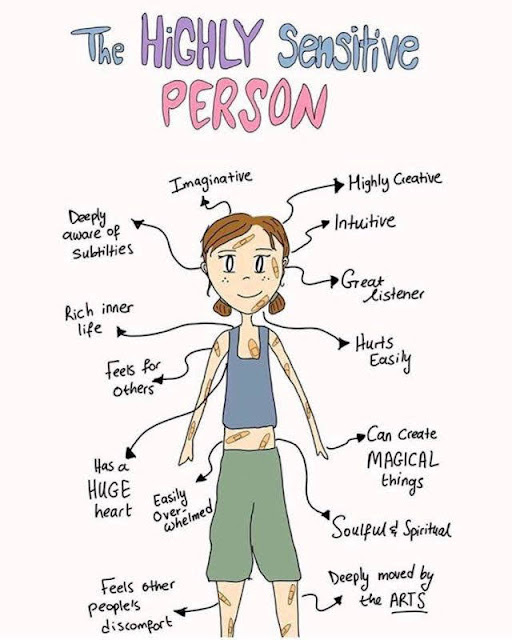
Have you ever been told - ‘You are too sensitive’ by people you consider as friends and family? That you over-react to things and situations?

If your answer is yes, then this post is for you.

If you have said it to someone close to you, then this post is for you too!


I went into therapy after I separated from my husband to be able to manage my depression, hyper anxiety and panic attacks. And man, did that open a pandora’s box. I discovered that I am an empath. That is also when someone told me that it is not good to be an empath because empaths give too much of themselves to and for others. That I should seek therapy to learn how to ‘turn it off’. And seek did I… Not to learn to ‘turn it off’ but to understand it. 

Granted, why I am an empath doesn’t have a glamorous backstory to it. In fact it is downright sad. But what I now say is, Empathy is my super power, and no super hero ever had an origin story filled with rainbows and unicorns, neither is mine.

Being an empath means that I feel strongly and deeply. Not only that, I also absorb the energies around me, whether positive or negative, and often lock it in my body. At first, it was extremely difficult for me to understand what part of what I am feeling is my own and what part of it is something I am picking up from the people around. I struggle with that still, but I am trying to learn to control it, so that I do not have to feel overwhelmed and exhausted all the time.

It took me a lot of therapy to understand that being able to feel deeply and strongly is not a sign of weakness. My feelings and emotions are my own and nobody has the right to tell me what to feel or how to feel or how much to feel. 

In the past have been told that I am too sensitive and that I over-react far too many times. 

Sometimes from a well meaning friend who wished me well, but mostly from people trying to gaslight me (and succeeding) in order to avoid taking a look at their own actions. To the point where I started taking it as a personal character flaw and beat myself over it till I was exhausted. I started wondering if it would be so much better if I did not care at all.

That is, till I was was prescribed anti-depressants and I spent a week feeling nothing. 

When I am happy, I feel that strongly too. I laugh. I dance. I celebrate and I am loud. Nobody complains then or tell me that I am over reacting… because everyone loves to have a good time. Yet, when I feel sad or hurt or betrayed, I am told I am being too sensitive and over reacting because it is too much work to even consider that I am human, I have a heart, may be hurt and I have a right to feel however I feel.


Photo Credit: Brighter Places

If you are someone who has told people that they are too sensitive, take a moment and consider… why does it bother you that someone cares and feels?

Take a moment to stop and think what you are really doing by invalidating someone’s feelings.

I want you to think why do YOU feel the need to invalidate someone else’s feelings and what does it actually do for YOU?

Chances are that you are avoiding to take a look at you own behaviour or statements.
Chances are that the sensitive person in your life is absorbing your energies and putting it back up as a mirror to you.
Chances are that you are the one who doesn’t have the capacity to understand what you are putting the other person through.

Maybe, it is time for you to take a look inward rather than outward. 


For those of you who have been told these gaslighting statements, remember that empathy is not a bad thing. Being sensitive is not a problem that needs to be cured. We need more of it in the world - the feelings, the understanding and the want to help instead of stone cold indifference & destruction.

If someone says these things to you, look at it for what they are. BIG RED FLAGS. The person saying these things maybe saying these to make you doubt yourself so that their actions are not closely looked at. They may even be manipulating you unknowingly - but that is what it is in the bottomline - manipulation.

Being a sensitive person in today’s world is a blessing to the rest of the population. We understand exactly. We care. And we are human. 

So, next time someone tells you that you are too sensitive… own it ‘coz you feel and care when others don’t. That makes you a much better person. We could all do with more understanding and sensitivity!


Monday, 21 February 2022

#MondayBlogs - Walk Away... #Gaslighting #Survivor

February 21, 2022


What does it feel like?

To be told that what you experienced moments earlier, never happened.
To be told that everything is only in your head.
To be told that you were being too emotional.
To be told that you were over-reacting.
To be told that you were the one forgetting things.
To be told that you were not good enough for anything.
To be told that you were too stupid to ever succeed.
To be told that you were a waste of space and a terrible drain on resources.
To be told that you couldn't take a joke after constant body shaming.
To be told that it wasn't their intention to hurt you while repeating the same thing for the 100th time.
To be told that it was your fault that you were hurting.

Everyday…
For months…
For years…
For close to a decade!

At first I fought. I took it up as challenge. I tried to prove them wrong. 
But how does one fight something that is being planted in their mind and doesn't actually exist? How does one win a challenge that shouldn't have been placed at all? How does one prove something that shouldn't need to be proven in the first place? 
And how long does one have to fight (alone) and keep proving things?

I am sure I knew the answer while growing up. But then I fell in love - Yes, Blindly! - and lost my way in the tornado that my life was. Constantly working. From the moment I woke up, till I crashed into my bed.

Working (from home) a job, handling a household and shouldering the responsibility and welfare of 6 other fully grown adults, day after day… Working up to 18 hours a day to deal with everything (and never less than 12 hours a day) to be able to take care of all the responsibilities that were suppose to shared by your life partner, (yet you find yourself handling them alone) - 7 days a week and 365 days a year is bound to have some effect on a human being. Everyone knows that, right? Apparently not everyone.

Cooking, cleaning, meetings, and promotional activities - constantly laced with comments and rebukes that aimed at reducing the family nurturer, the 'ghar ki Lakshmi' in to something less than a sentient being still happens in the 21st Century.

All that along with intermittent love-bombing!

You go into a shell - the survival mode. Always being prepared and trying to reduce any chances of triggering another round of 'how useless you are tirade'. You start to dim that spark, that is so eternally you, so that every one else is under the spotlight while you hide in the shadowed corner. You do not let the spotlight be ever on you - even though it is your story, your life! Shrinking into a ball, not taking up space and yet making it easier for people to kick around.

And should you dare to question it, i.e., if you still have some semblance of self left, and ask why - the society around you (some even in guise of friends) will gather to remind you that all you are good for is to keep your mouth shut, adjust and compromise. A 'failure of a being' has no right to ask questions. You only get to continue to try and prove your worth in exchange of being 'allowed' to breathe.


Would you consider stop breathing if that is the only way to end the hurt and pain?

Many do!

But there is another way… Stand up, break the invisible shackles and walk away! 

(read invisible shackles as: expectations forced on you by those close to you and the society; the constant self doubt drilled into you; the crippling fear you feel; the unshakeable belief that you cannot make it on your own; the anxiety of how could ever do anything right on your own; the mind blowing concept of what will people say… in short - whatever it is that is holding you back in a life that is slowly sucking your spirit out.) 


It is hard! The hardest thing you will probably do... When you finally have had enough, and realise that staying on will eventually kill you, much before your time; and when other people will reiterate that all you can do is stay and compromise. Try and remember, that there ARE people who will support you and help you... So, keep at it till you find someone who'll throw the life jacket when you are drowning. And then, swim... swim for the shore - your life!


And it starts getting better almost immediately.


Its been over a year since I walked out… And, now all I know is what it feels like…


To be told that you are strong.
To be told that you are a heck of a fighter to have survived.
To be told that you are worth more than ten of them.
To be told that you are loving and caring.
To be told that you have a right to take up space.
To be told that you deserve to have your needs met.
To be told that you are inspiring.
To be told that you have an amazing sense of humour.
To be told that you are a responsible person.
To be told that your are a logical and practical person.
To be told that you are loved.
To be told that you are seen.
To be told that you are cherished.
To be told that you are wanted and desired.


It is good for your body. It is good for your mind. AND, it is the most liberating thing for your spirit.


Tuesday, 26 May 2020

My Mini Version and a Thoughtful Afternoon

May 26, 2020


Life is hard with a toddler, life is very hard with one toddler and one unofficial toddler (read: husband), and it is extremely difficult with both of them at home because of this lockdown. It’s almost like, if the lockdown goes on any longer, the mothers’ union will manage to create a vaccine to send their toddlers to school and office respectively.

My three-year-old daughter is a mini version of me. God! She is a smart baby; asking questions the entire time and challenging every single rule. All these questioning and challenging rules are fun when I am doing it, however, when a three-year-old refuses to listen to you and argue, it just drives me crazy. And the mighty husband enjoys the show from the front seat.


While having a crazy quarantine, I was thinking about my pregnancy and what struck me most is that I wanted a boy child and I am not ashamed of it.

My whole life, I really considered myself a feminist, and most of my actions reflected that. One of the best compliments I ever received is from my MBA classmate who called me a true fearless feminist.

But when I became pregnant the first thing that came to my mind was that I wanted a boy. And that very thing felt so damn wrong. On one hand, I claimed to be a feminist, belief in equality, and on the other hand, I wished to have a boy. I should have been wishing for a healthy baby, irrespective of the sex of the baby.

That very thought haunted me for days. On Surface, It seems like I just want a boy child. But it was only when I dug deeper that I discovered the real reason why I wanted a boy child.

One thing is very clear in our society, not only in India but the whole world, it is primarily a male-dominated society whether we like it or not. Still, there are some people, called feminists (I swear to god, it sounds like an abusive word nowadays) who still dare to believe in equality, striving for a society, which is based on equal rights, equal choice, and equal opportunity. In most cases, the work of feminism was concentrated on the independence of women, women empowerment, equal pay, equal job opportunity, equal opportunity for education, etc. And we have created a generation of ladies who are independent, smart, intelligent, and ready to take on any responsibility and do what is needed.

No matter what, one thing we all can agree, the two genders are an equal part of our society, and in order to achieve holistic growth we need to address both genders, only making our girls independent won’t solve the problem. However, men, in general, are not used to such independent women. Someone once told me, you are too smart to be a woman. And he received a very polite reply from me, i.e. “you are too dumb to be a man”. Sadly, this answer does not even come close to generate a real change in our society.

What we mothers, parents' families really have to do is construct a generation of men who are ready for independent women, take them as their friends, wife, sister, mother, and not be afraid of their intelligence.

And that is the reason for me wanting a Boy Child. I wanted to raise a man who treats all humans equally, who is very good at household work, earns his own living, takes care of a baby, in short, can do everything a woman can do.

All human beings are equal, but the challenge here is to raise men who are equal to women. 

My mini version of me sleeping beside me, while I am writing this, and I am proud of her for every smart little things she does, for every question she asks and challenges the societal gender norms in her own kiddy way, I still want to raise a boy to show the world that there is a man who can cook, clean, wash, babysit, work, earn, love and be a MAN. 


Tuesday, 5 May 2020

A Widower and a Sad Afternoon

May 05, 2020


It was just another Wednesday afternoon during the lockdown. I was about to finish cooking and start cleaning the house. I was sweaty, irritated, and hungry when my husband decided to call me at the top of his voice. I responded to him with the normal frustration and he told me Irfan Khan has passed away. I was not expecting this. My first reaction was that this must be fake news. But to my utter disappointment, it was not, and I felt so gloomy for the rest of the day. 


Later in the afternoon, I was watching one of his old interviews where someone asked him about his most difficult acting jobs and Irfan Khan mentioned two names: Life of Pi and In Treatment. I had never heard of “In Treatment” TV series and started watching it immediately (what better way to honor his memory other than watching what he considered one of his most difficult acting jobs). 

In Treatment is an American HBO drama which was produced and developed by Rodrigo Garcia. It is about a psychotherapist, 50-something Paul Weston, his weekly sessions with patients, as well as those with his own therapist at the end of the week. The series debuted in January 28, 2008. 


I have only watched the part in season 3 where Irfan khan played a 52-year-old widower Sunil,  who was transported to New York from Calcutta following the death of his wife. His new life entailed him living with his son, daughter-in-law and their two young children. 

Sunil is not only depressed by his wife’s death, but he is also deeply wounded by his son’s decision to marry an American woman and angry at what he sees as his daughter-in-law's insensitivity. He is extremely disappointed with his son’s American lifestyle and thought process where he chooses his personal happiness over family respect and pride by marrying an American woman. 

I cannot express how much I got affected by this. Saying 'brilliant' would be an understatement. 

Sunil’s (Irfan Khan) son Arun/Aaron and his wife guides him to see a psychologist since he is finding it difficult adjusting to his new life in America. Sunil refuses to take a bath or eat, and doesn’t maintain proper personal hygiene. Sunil also displayed deeply resentful behavior towards his daughter-in-law and probably has some unresolved sexual tension towards her. 

As the series progresses, we learn more about Sunil, his lost love, a tragic suicide, and an unborn child. The series is portrayed as a mystery drama, where you can say for sure something is hidden but can’t exactly figure out what it is. The ending of the series is unpredictable and leaves you with a heartache. 

Irfan Khan portrayed the character of Sunil with so much ease that it seems like the audience is witnessing a real counseling session. On the surface when the audiences see Irfan’s character, he comes across as depressed. However, as we get to know more about him, there is an undertone of anger (second stage of grief), sexual tension, and huge guilt building up over time. 

Sunil is an extremely complex character. He was probably brought up by narcissistic parents who hammered a false sense of family pride before anything. For him, putting his family's pride before his happiness is a sign of a disciplined life. As such he resents his son for marrying someone he loves instead of the girl Sunil and his wife choose for him. In reality, he resents himself for not fighting for his own love; he didn’t even think of fighting and accepted the fact that marrying someone from his caste is the best thing to do. As a result, he was responsible for a death. 

All these issues from his childhood and past combined with his recent loss of his wife and moving to America became an unbearable situation for him. 

What will he do to resolve this? The story offers an answer in the end.


While watching, I saw Sunil, (not Irfan Khan) a middle-aged Bengali, his struggle, hopes, dreams, and an endless quest for a disciplined life. And that is the brilliance of Irfan Khan’s acting. You don’t see him; you see the character he is playing. That is the true nature of an Actor.


I will miss him, as will the film industry and people all over the world. I want to finish this with a dialogue from his movie ‘Life of Pie’: 

"I suppose in the end, the whole of life becomes an act of letting go, but what always hurts the most is not taking a moment to say goodbye".


Monday, 27 April 2020

Kabir Singh and a Lazy Afternoon

April 27, 2020

I was going through a very difficult time in my life when my friend (philosopher and guide) Debdatta suggested I should write and put it in a blog. She actually gave me access to her personal blog, and the lazy me didn’t do anything concrete with it. 


After this lockdown, like many others, my husband is at home and eating my head along with sweets, biscuits, and every possible snack and bugging me to do something about my free time. My friends and husband seem to have a lot of confidence in me that I will do something good in life; however, I am happy with my lazy ass.

Yesterday, after a heated argument, which I think my hubby won, he convinced me to write. Therefore, here I am trying to collaborate one of my favorite subject Psychology with not at all favorite character Kabir Singh. 

Before I start, let me clarify that I am talking about Kabir Singh as a character, not Shahid Kapoor the actor.


The primary criticism the movie received is that it is promoting misogyny and being anti-feminist. However, I found the main problem in the movie is: The director is promoting a mental illness as a masculine trait and fun quality. Kabir Singh is clearly suffering from Intermittent Explosive Disorder (IED). It is a very much real disorder recognized by DSM (Diagnostic and Statistical Manual). The DSM-5 defines Intermittent Explosive Disorder as “recurrent behavioral outbursts representing a failure to control aggressive impulses.” (American Psychiatric Association, 2013)

From the very beginning of the movie till the end, there are multiple occasions where it is very evident that he needs some medical help, counseling, and medication. Having a mental disorder is not fun, like many other physical problems it needs to be treated. I actually felt like the director Sandeep Reddy Vanga trying to say like, “hey Kabir! You have a brain tumor (comparing IED with a physical disease to have a better understanding), it’s actually fun to have a deadly disease and the best part is you are not going to be treated, and most importantly, you are a doctor.”

For god’s sake get some treatment Kabir, you are a doctor, I am sure you know some good psychiatrists and they can give you some discount also. Anyhow, Kabir was consuming so many drugs; it won’t kill to replace them with some prescribed medicine. 

I am sure after the treatment, people will not call you a misogynist, and even if you still behave like a jerk with girls, you can definitely do something about it and get improved. But first, consult a psychiatrist.

And lastly, let me tell you who the main villain in the movie is… Any guess…

It is that dean of that medical college, he asked Kabir to write an apology letter for his aggressive and violent behaviors and didn’t bother to understand that he is sick with IED and needs to visit a psychiatrist. 

This is my two cents about Kabir Sigh. I hope I will not get back to my lazy routine and continue to write more. 

Please suggest to me something to write about. I struggle a lot with prospective topics. 


Thanks