Follow Us

Showing posts with label Self-Development. Show all posts

Monday, 1 December 2025

Why Rest Feels Illegal (And How to Rebel Anyway) #MondayBlogs

December 01, 2025 0 Comments

 It always starts innocently enough. You decide to take a break, maybe a fifteen-minute scroll through nothingness, maybe a nap that dissolves time entirely. Then, right on cue, the guilt slithers in. That itchy little whisper: shouldn’t you be doing something right now? We’ve turned idleness into a moral crime. Stillness feels dangerous, indulgent like eating ice-cream for dinner or ignoring an urgent email that probably wasn’t urgent at all. We even disguise our rest as productivity to make it acceptable:
“I’m recharging”
“It’s part of my creative process”
“Self-care Sunday.”


As if simply being needs a justification.


We live in fast-paced times where an individual’s worth is measured in output. In posts published, tasks checked, and in steps counted. So when you do nothing, it feels like letting yourself and the world down. Even rest now comes with progress bars. My fitness kept prompting me to “track recovery” alongside “track fitness.” Imagine that! You must perform even in your sleep. Somewhere between capitalism and caffeine, we absorbed this belief that stillness is laziness. That if you’re not moving, you’re falling behind. But behind whom, exactly? The answer changes daily. Sometimes it is that influencer with the perfect morning routine, sometimes it is a colleague who is thriving on burnout, and sometimes you beat that imaginary version of yourself who never wastes a second.

Doing nothing has become an act of defiance because to sit quietly, without producing, improving, or proving, is to reclaim your humanity in a world that monetizes every breath. Maybe the problem isn’t that we’re tired. Maybe it’s that we’ve forgotten how to stop without feeling like we’re doing something wrong.

Somewhere along the way, someone decided that rest had to be earned. Like it’s a prize you get for surviving your own overcommitment. You work yourself raw. Then once you’ve proven that you are suffering enough, do you get to sleep, to read, to breathe. We have to wait till the inbox is empty, the dishes are done, the to-do list resembles a battlefield cleared of enemies. And when we finally sit down, it is not peace that we feel. It is relief edged with guilt. Because apparently, we can’t even stop without a reason.

We wear exhaustion like a badge of honor. We compliment people for being “so busy,” as if depletion is a virtue. “I haven’t slept properly in days” has somehow become a humblebrag and an offering to the gods of productivity. Meanwhile, our nervous systems are waving flags of complete surrender.

What’s tragic is that rest was never meant to be a trophy. In nature, it is a rhythm. The tide goes out. The moon wanes. Even seeds stay dormant before they bloom. No one scolds them for being “unproductive.” But humans? We schedule burnout like it’s a recurring meeting. The irony is painful: we chase momentum but refuse to see that even motion has pauses built in. A heartbeat, a breath, a drumbeat… they all depend on space between sounds. Take that space away, and what’s left isn’t rhythm. It’s noise.

So maybe it’s time to stop treating rest like a reward for endurance. Rest isn’t what you get after you’ve lived. It’s how you live. It’s the pause that keeps the music from collapsing into chaos.

There’s a quiet kind of rebellion in closing your laptop while the world screams “hustle.” No fireworks needed. Just a simple act: choosing to stop. We’ve been trained to believe that rest is the absence of progress, that stillness equals surrender. But what if… just what if, stopping isn’t the end of motion, what if it’s the beginning of meaning?

Rest, in its purest form, is refusal. Refusal to be consumed. Refusal to perform with burnout as proof of value. Refusal to run a race no one actually wins. To rest is to say: “I’m still human, even when I’m not producing.”

That’s not laziness. That’s resistance.

Look at any creative or revolutionary life, and you’ll see the pattern. Artists vanish between projects. Writers retreat after the noise. Rest isn’t what comes after greatness; it’s what allows greatness to exist.

Agust D goes silent before a storm of music.
SRK disappeared for years, before delivering a comeback that will go down in history.
{Ofcourse I had to tie-in my two favourite men 😀}

There’s something beautifully subversive about rest that’s unapologetic. Not “I’ve earned this,” but simply, “I exist, and that’s reason enough.”

Here’s the cruel joke: we say we want peace, but we can’t stand what peace feels like.

Stillness, true stillness, is a confrontation. When the noise stops, the mind doesn’t sigh in relief. Instead it panics. Suddenly there’s space, and in that space comes everything we’ve been running from: boredom, anxiety, unprocessed grief, the sound of our own thoughts echoing too loudly.

That’s why rest feels wrong. Stillness reveals what we are trying to avoid.

We’ve wired ourselves for constant stimulation. We can’t even stand in an elevator without reaching for our phones. Our brains, marinated in dopamine hits and notifications, have forgotten the flavor of quiet. We call it “doing nothing.” Anything but what it really is: existing without distraction. It terrifies us, because we’ve built our identities around doing. Ask someone who they are, and they’ll tell you what they do. Jobs, hobbies, achievements. Rest strips that armor off. It forces us to ask: who am I when I’m not performing usefulness? So we stay busy to avoid ourselves. We call it discipline, ambition, drive… anything that sounds better than fear.

So, how do we rebel gracefully without giving up life?

You don’t have to renounce society, move to the mountains, or delete every app to reclaim rest.

You just have to stop apologizing for being human. Rest doesn’t have to look like lying in a meadow with your phone on airplane mode (though that sounds divine). It can be quiet resistance threaded through ordinary hours… a refusal to make every second productive.

Here’s how to start rebelling without burning down your life:

1. Schedule rest first, not last.

Treat rest like a meeting with your sanity. Put it on your calendar before the work, not after. If you wait till you “deserve” it, you never will.

2. Redefine success.
Try measuring your days by energy instead of output. Did something restore you today? That counts more than the number of emails you sent.

3. Take micro-pauses.
Tiny rebellions does wonders for you. Stare out the window for five minutes. Breathe without purpose. Listen to music without multitasking. Be unproductive with intent.

4. Let boredom breathe.
You don’t have to fill every silence. Boredom is the compost heap of creativity. Leave it alone long enough and something wild might grow.

5. Rest publicly.
When someone asks how your weekend was, try saying “I did nothing,” and resist the urge to justify it. Watch their face twist in confusion. That’s their system short-circuiting.

6. Remember the body knows before the mind.
If your body is screaming for rest, believe it. You can’t think your way out of exhaustion. You can only stop.

At some point, you stop chasing and start noticing. The light on the wall. The sound of your own breath. The way time expands when you stop demanding things from it. You realize the world doesn’t fall apart when you step away. The emails keep arriving. The projects keep orbiting. The planet keeps spinning, almost insultingly fine without your supervision. And somehow, that’s not depressing. It’s relief.

Because maybe the point was never to keep up. Maybe the point was to wake up.

The real power lies in knowing when to stop, and daring to stop anyway.

So rest. Not because you’ve earned it, but because you exist.

Rest because the world has enough noise, and your silence might just be the most radical sound in it.

Rest because you can.


Saturday, 15 February 2025

Extroverts... A Guide on How to Be Quiet - #MondayBlogs

February 15, 2025 0 Comments

Somewhere along the way, silence became a problem to be solved. Sitting alone at a party? Someone must come to your rescue. Not participating in a group activity? Clearly, you need encouragement. Quietly enjoying your own space? Oh no, we can’t have that. Because in a world that glorifies constant interaction, stillness is mistaken for loneliness, and solitude is seen as a cry for help.


As an introvert, I’ve spent years dodging well-meaning but relentless attempts to make me more social, as if my natural state is something to be fixed. At social gatherings (the ones I can’t avoid, anyway), I’m perfectly happy sitting in a corner, observing, or simply existing without feeling the need to contribute to the collective noise. But that’s rarely an option. Someone always thinks they’re doing me a favor by dragging me into a conversation, a party game, or—worst of all—to the dance floor. Because in their mind, I can’t possibly be enjoying myself if I’m not talking, moving, or otherwise proving my engagement.


It’s exhausting. And frankly, it’s time for a perspective shift.


This blog post isn’t about how introverts can “come out of their shells.” It’s not another list of ways we can learn to navigate a world that never stops talking. We have enough of those already. No, this is for the extroverts—the ones who thrive on energy, who can’t stand silence, who equate stillness with boredom, and who feel the need to fill every moment with noise.


Let’s flip the script. What if, instead of pushing introverts to be louder, extroverts learned to be quieter? What if you discovered that peace exists beyond constant conversation? That silence doesn’t need to be awkward, and not everyone is desperate to be included?


This is your guide to embracing the lost art of silence and, more importantly, learning when to just let introverts be.


No, We’re Not Broken: Myths About Introverts


For some reason, introversion is often treated like an unfortunate condition—something that needs to be fixed, managed, or overcome.

“You should speak up more!”

You just need to get out more...
“You’d have more fun if you joined in!” 

“You just need to come out of your shell!”

These are the well-meaning but utterly exhausting phrases introverts hear all the time.


So, let’s set the record straight. Here are some of the most persistent myths about introverts—debunked, once and for all.


1. Introverts are just shy.

No, introversion and shyness are not the same thing. Shyness is about fear of social judgment, while introversion is about energy. An introvert can be completely comfortable speaking in front of a crowd and still want to go home afterward and sit in silence for three hours.


2. Introverts don’t like people.

We like people. We just don’t like all people, all the time, in all settings. There’s a difference. Introverts value deep, meaningful connections, but the idea of filling every silence with small talk is pure torture.


3. Introverts don’t have fun.

Just because we don’t express excitement the same way extroverts do doesn’t mean we’re not enjoying ourselves. We don’t need to scream, jump, or dance to confirm that we’re having a good time. Sometimes, the best kind of fun is sitting in a quiet café, reading a book, or having a one-on-one conversation that doesn’t involve yelling over loud music.


4. Introverts are bad at socializing.

Introverts can be great at socializing. They just do it differently. Instead of bouncing from one person to another, they prefer quality over quantity—fewer interactions, but deeper ones. Also, they don’t believe in talking just for the sake of talking. Silence is perfectly fine, and no, it’s not awkward.


5. Introverts need to ‘come out of their shell.’

This is probably the most frustrating myth of them all. There is no “shell.” This is our personality. An introvert sitting quietly in a group isn’t waiting to be “saved” from themselves. They’re just… fine. Imagine that.


6. Introverts don’t like attention.

Not necessarily true. Some introverts love being in the spotlight—on their own terms. Many actors, musicians, and public speakers are introverts. The difference is, they need time to recharge afterward, whereas extroverts might thrive on the attention and seek more of it.


7. Introverts can’t be friends with extroverts.

Introverts and extroverts can be great friends—as long as there’s mutual respect. The key is understanding that introverts don’t always want to hang out, and that’s not a sign of disinterest. Sometimes, silence is just our way of being present. Almost all of my close friends are extroverts - they understand that I'd rather just observe than participate.


8. Introverts are always quiet.

Oh, we can be very loud—when we actually have something to say. Give an introvert a topic they’re passionate about, put them with the right people, or just catch them in the right mood, and they’ll talk your ear off. The difference? We don’t feel the need to fill silence. If there’s nothing important to say, we’re perfectly happy just existing in the moment.


Now that we’ve cleared up some misconceptions, let’s move on to the real challenge—helping extroverts embrace quiet and resist the urge to fix what isn’t broken.


Silence Isn’t Awkward—You Just Don’t Know What to Do With It


Let’s talk about silence. That vast, terrifying void where no one is talking, no music is playing, and—heaven forbid—no one is performing social energy exchanges every five seconds.


For some people, silence is peaceful. For others, it’s an unbearable abyss that must be filled with noise, chatter, or the first random thought that pops into their head (“So, uh… crazy weather, huh?”). If you fall into the second category, I have news for you: silence is not the enemy. You’ve just never learned how to sit with it.


Think about it. When was the last time you sat with someone in comfortable silence? No checking your phone, no feeling the urge to fill the gap, no background noise—just existing in the same space without pressure. If that idea makes you itch, then congratulations, you’ve just found your next personal growth challenge.


The truth is... silence only feels awkward if you believe it should be. But it doesn’t have to be. It’s just another form of communication—one that introverts are fluent in. Sometimes, the best moments aren’t the ones crammed with endless words, but the ones where you can just be.


Now, if you’re wondering, “Okay, but what am I supposed to do with silence?”—don’t worry, we’re getting there. Up next: a few practical tips on how to embrace quiet, respect introverts’ space, and maybe, just maybe, discover the joys of shutting up every once in a while.


How To Be Quiet (Without Exploding):


So, you’ve made it this far. You now know that introverts aren’t secretly miserable in silence, and you’ve accepted that not every moment needs to be filled with words. Great progress! But what now? How do you actually do quiet? How do you resist the overwhelming urge to fill every silence, drag introverts into activities, or—let’s be honest—just keep talking?


Don’t worry. I got you. Here are some practical ways to embrace quiet and, in turn, become the kind of extrovert that introverts actually enjoy being around.


1. Learn to sit with silence.

I know, I know. Silence feels weird at first. But instead of rushing to fill it, try sitting with it. Let a conversation pause without scrambling for a follow-up question. This maybe a perfect time to 'reflect' internally. Trust me, it won’t kill you.


2. Stop assuming quiet = uncomfortable.

If an introvert is sitting alone, they’re not silently begging you to rescue them. If a conversation has a lull, it doesn’t mean the vibe is ruined. If you let go of the idea that silence is awkward, you’ll realize it’s actually… peaceful.


3. Don’t force social activities on introverts.

Look, we get it—you love a good party game, group activity, or spontaneous karaoke session. Good for you. But if an introvert is clearly not interested, let them be. Stop with the “Come on, just try it!” If they wanted to, they would.


4. Lower your volume.

This one is simple. Just… talk a little softer. Not every conversation requires maximum enthusiasm, vocal projection, and hand gestures that could knock over a drink. Sometimes, a calm, normal-toned conversation is enough.


5. Respect the “Irish Exit.”

You know that moment when an introvert just disappears from the party without saying goodbye? That’s called an Irish Exit. And no, it’s not rude—it’s survival. If they’ve had enough socializing for the day, respect it. No dramatic “Where are you going?!” Just let them slip away in peace.


6. Be mindful of personal space.

Some extroverts love physical touch—hugs, shoulder pats, leaning in close. Introverts? Not always. Before you invade an introvert’s bubble, read the room. If they stiffen up when you go in for a hug, maybe… don’t.


7. Give introverts time to warm up.

Introverts don’t always jump into conversations with the same energy as extroverts. Instead of bombarding them with questions or expecting instant engagement, let them ease into it. The more comfortable they feel, the more likely they are to actually want to interact.


8. Accept that “No” is a complete sentence.

If an introvert declines an invitation, don’t push. Don’t guilt-trip. Don’t launch into “But why not? It’ll be so much fun!” Just accept the answer and move on. They’ll appreciate you for it.


9. Text first. Always.

Before calling, or video calling, or just showing up, send a text. Give the introvert a chance to mentally prepare. Unannounced social interaction is a crime against introverts, punishable by days (or even months) of avoidance.


10. Try doing something quiet for a change.

Instead of planning yet another loud, high-energy gathering, try a low-key activity—reading in the same room, watching a movie without constant commentary, or just taking a quiet walk. You might be surprised how much you enjoy it.


At the end of the day, this isn’t about changing who you are. It’s just about recognizing that not everyone thrives in constant noise and interaction. Respecting introverts’ need for quiet isn’t just about making them comfortable—it’s also a chance for you to experience a different kind of peace.


So, take a deep breath. Embrace the silence. And maybe, just maybe, learn to enjoy the sound of nothing.


Thursday, 10 August 2023

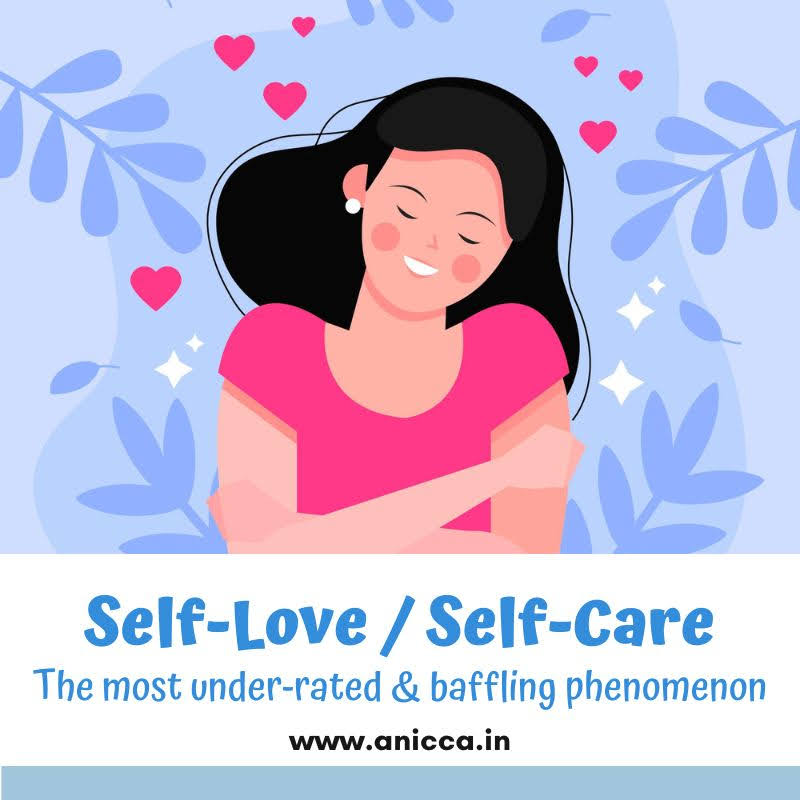
Embracing Self-Care and Self-Love: A Deeper Perspective

August 10, 2023 0 Comments


The concept of self-care and self-love has gained immense popularity. It is everywhere. People are talking about it across all social media platforms and  you hear about it in everyday conversations. However, if you really pay attention, it becomes quite apparent that many people discuss it without fully understanding it.

We have all been guilty of this at times - talking up things that we learn before understanding it completely. Personally, I too have been advocating for self-care for almost five years. Though with each passing year I have learnt and discovered more ~ its been a journey of continuous reading, watching, and learning.


Defining Self-Care / Self-Love

In the past, I would have described self-care as taking a little time out to pamper oneself. It could be something as simple as perhaps enjoying a cup of tea alone in the morning or indulging in a yearly body massage. But my understanding was limited to those small acts.

Despite these check-ins with myself, I rarely took meaningful action to address my physical and mental state. I would acknowledge the need for a break but felt burdened by responsibilities and obligations, convincing myself that putting myself first would be selfish. This mindset that the society has taught us, especially women, led me down a path of constant work, stress, and neglecting my well-being while taking care of everyone else until I experienced a severe burnout.

Looking back, I now realize that my understanding of self-care was superficial. While pampering oneself occasionally is essential, genuine self-love often demands more from us.

Discovering True Self-Love

Authentic self-care might sometimes push us to give ourselves the space we generously offer others; listening to and honoring what our minds and bodies are telling us. At times, it may even require us to embrace discomfort by being "selfish" enough to take that much-needed break or say no when we are already overwhelmed.

Self-love can also be painful, as it might require us to let go of relationships that no longer serve us or removing sources of negativity around us -even if they are friends or family.

However, before dismissing this as mere selfishness, consider three vital aspects:
The Definition of Selfishness: Is it selfish to listen to our minds and bodies, take a break from time-to-time, or set boundaries? Such steps are crucial for maintaining our well-being.
Who Defines Selfishness: If society deems these acts as selfish, reflect on whether those same people will support you during your darkest times or help pay your bills or help you with your mental and physical health needs.
The Importance of Self-Love: Without self-care, it becomes challenging to achieve our dreams or take care of others effectively. We must nourish ourselves to be capable of giving to others.


Embracing Self-Love: A Call to Action

At the core of it, self-love is about showing up for yourself every day and in every moment. It means saying no to things that don't align with our interests, cutting ties with toxic individuals, and prioritizing our well-being before caring for others.

As I look back on my enthusiasm for self-care when I first learnt about it without fully understanding its depth, I now realize the importance of introspection. By looking within, we can understand what our body and mind truly need. Only then can we start working on how to fulfill those needs without causing harm to others.

While this article provides insights into self-care and self-love that are my personal opinion from reading, learning, and experiencing things in own life, I suggest you to conduct further research and tailor these principles to suit your unique needs and personality.

Remember, genuine self-love requires continuous growth and understanding, making it a personal journey for each individual.